History
Appledore II
Nothing stirs the romantic heart more then the Appledore II’s classic wooden hull whispering its way into the seas. The Appledore II – more then a boat, it’s a tradition.
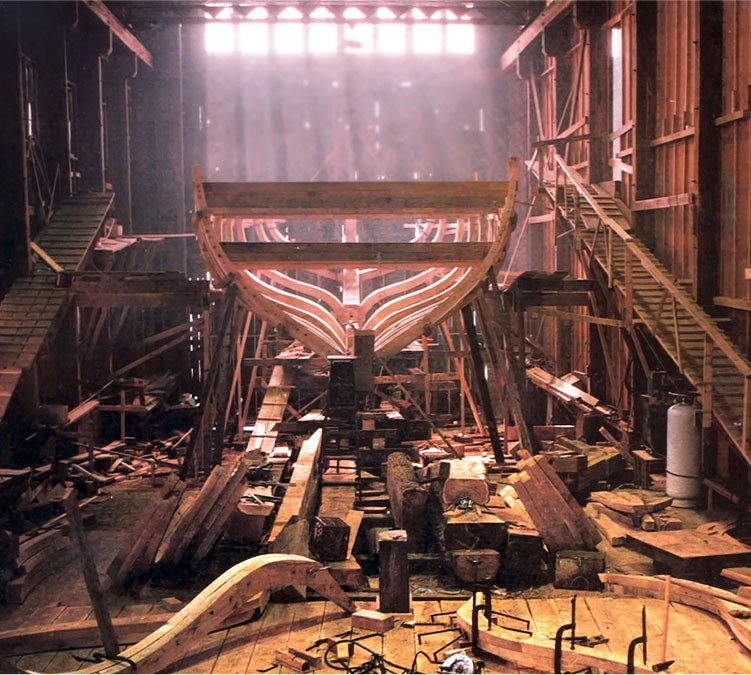
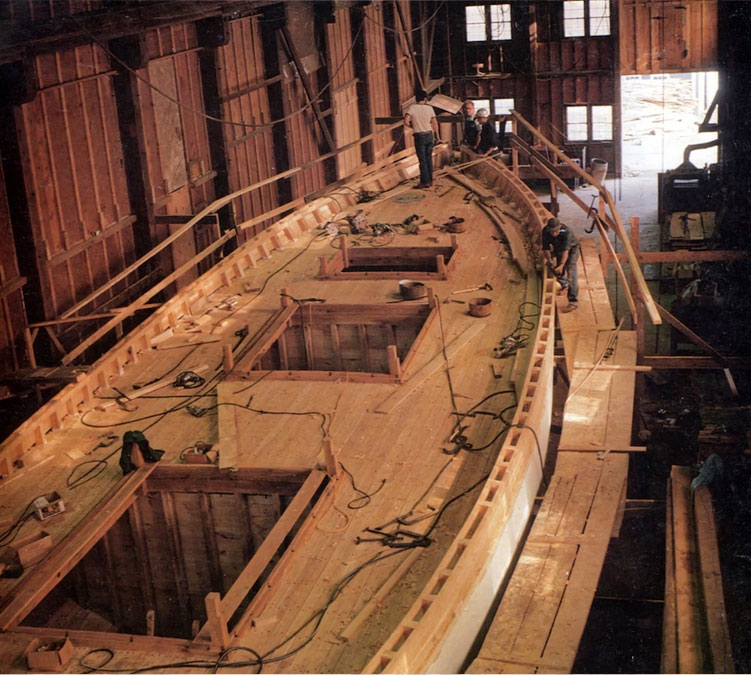
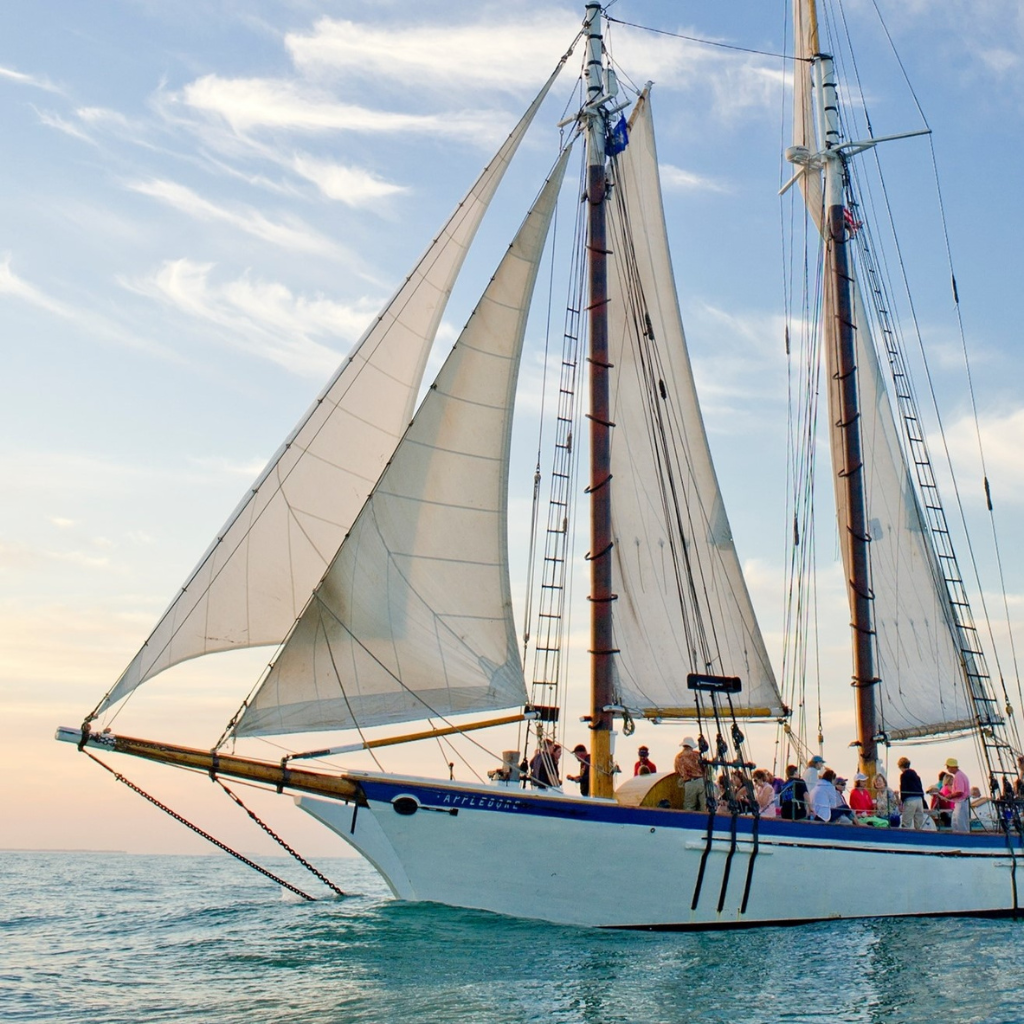
Launched on August 22, 1978, the wooden schooner Appledore II is proud of her colorful history. The Appledore II is a majestic 86’ windjammer and the largest of her sister ships, Appledores I, III, IV, and V. She is the last schooner custom built by the Gamage Shipyard. Established in 1924 in South Bristol, Maine by Harvey F. Gamage, the shipyard built and launched many famous tall ships, including the Mary Day, Harvey Gamage, Shenandoah, Bowdoin, Bill of Rights and the Spirit of Massachusetts.
The Appledore II was built traditionally, using time honored techniques of shipbuilding. Looking at her, you are reminded of the phrase, “wooden ships and iron men.” Designed by Bud Macintosh, a renowned naval architect and shipwright, the Appledore II is constructed in the finest tradition of New England ship building. His design is now recognized worldwide for the schooner’s heavy weather, open ocean capabilities.
From the moment you set foot upon her solid deck, you sense something special about the Appledore II. You are taken with the massive spars, the symmetry of the rigging and sheets coiled on their pins, the glossy grain of varnished wood. The Appledore II is strong, stable and swift, with a ten-and-a-half-knot hull speed and 110-degree knockdown rating. In laymen’s terms, this ship will get you there, quickly and without incident.
Herbert and Doris Smith, the original owners and captains of the Appledore II, helped build the schooner. The Smith’s named their series of schooners after Doris’ hometown, Appledore Island – part of the Isle of Shoals – located off the New Hampshire coast. Appledore II was launched in 1978 from Portsmouth, New Hampshire for an 18-month circumnavigation stopping at numerous ports around the world, before returning home to Portsmouth. This voyage has been chronicled in two books, Dreams of Natural Places, A New England Schooner Odyssey and Sailing Three Oceans, both authored by Herbert Smith.
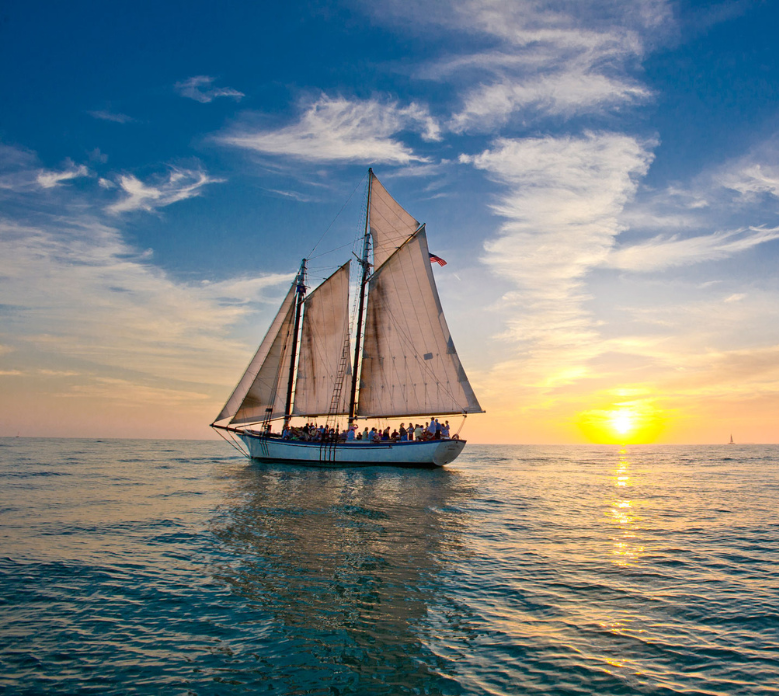
Since that time, the Appledore II has sailed extensively throughout the Caribbean, serving as an educational platform and private charters. For a number of years the ship served as the Semester At Sea vessel for Marine Biology majors from South Hampton University. For over 35 years now she has served double duty offering day sails from her home ports of Camden, Maine and Key West, Florida. Twice a year this stout, seaworthy ship makes the 2,000-mile off shore voyage along the Eastern seaboard between her two harbors.
The McKean Family (John and Jane) purchased the Appledore II in 1988, sailing the historic schooner in both Key West, Florida and Camden, Maine. In 2003, the McKean Family partnered with Sebago Watersports for the Key West operations. This partnership expanded in 2016 to include the Camden, Maine operations. Both parties are extremely excited about this partnership expansion which allows them the opportunity to maintain the history and tradition of this magnificent schooner while making new and exciting changes.
Nothing stirs the romantic heart more then the Appledore II’s classic wooden hull whispering its way into the seas. The Appledore II is more than a boat, it’s a tradition.
Appledore Star
History beckons when admiring the Appledore Star’s fine hand-crafted details. Designed in the tradition of Chesapeake Bay oyster draggers from by-gone days, the Appledore Star now explores Key West’s shallow waters.
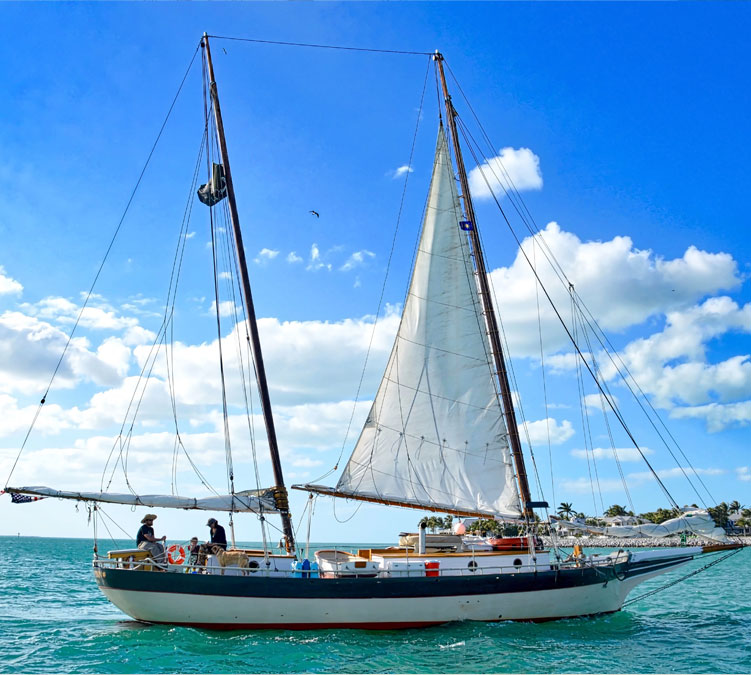
The Appledore Star is the last known bugeye schooner to be built. Legendary shipbuilder, James B. “Mr. Jim” Richardson of Lloyds, Maryland, built working wooden ships with a …”view to the past, which sought to rediscover, preserve and pass on methods used by craftsmen of previous generations.” Richardson Maritime Museum Home Page When Richardson retired from an esteemed career of building boats for others, he decided it was finally time to build a boat for himself.
With an eye to history, Richardson wanted a boat with a pedigree that was also easy to sail. Spending time around Chesapeake Bay he was familiar with a schooner style sailed in the 1800s for oyster dragging. Needing a shallow draft, log canoes were originally used for oyster dredging but were too small to handle large loads. Bugeye schooners were designed with a centerboard design that allowed them to sail in the Bay’s shallow waters while a low bulwark made it easy to handle dredges and drag for oysters. As the oyster harvest declined, the bugeye schooner dropped out of favor and was replaced by the Skipjack, a less expensive design for oyster dragging.
There are many ideas of how bugeyes got their name. According to the Mariners’ Museum in Newport News, Virginia, Chesapeake Bay – Watermen – The Mariners’ Museum there are two leading theories. One is that the numerous Scottish immigrants living around Chesapeake Bay referred to oyster shells as “buckies” which over time became “bugeye”. The other theory is that the name comes from the boat’s appearance. From afar the hawse-holes at the bow of the boat look like a bug’s eyes and the bow sprit looks like a nose.
With a round stern, raked masts, and a centerboard, the bugeye schooner has a distinctive design with a simple rig. Having decided on the style, in 1983 Richardson built his wooden two-masted boat by hand. The boat was a true labor of love and he named her the Jenny Norman after his childhood crush. He spent his twilight years sailing the Jenny Norman on Chesapeake Bay.
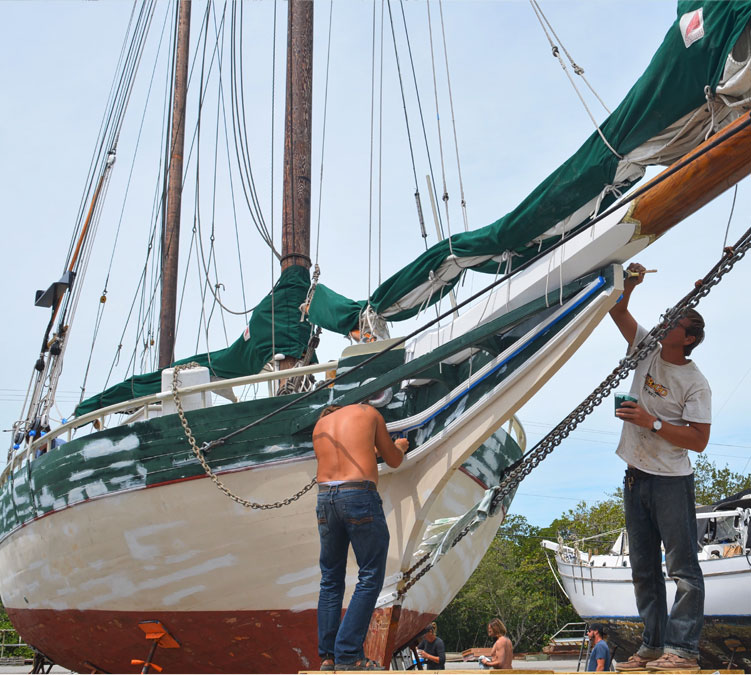
Following his death, the boat was sold and unfortunately neglected for a decade. The Jenny Norman was rescued in 2000 when a skilled shipwright, Mike Rodgers of Maine, bought the boat. Mike and his wife, Julie, poured their hearts into the Jenny Norman succeeded in bringing her back to her former glory. They obtained Jenny Norman’s initial US Coast Guard Certificate of Inspection and started running charters with the schooner in 2003 out of Rockland, Maine.
One of the guests, Bill Noonan, went on an overnight voyage in 2007 with his sons on the Jenny Norman. The experience stayed with him, strengthening his family bonds while enjoying freedom from everyday technology. He realized that many families would appreciate a similar adventure and bought the Jenny Norman to charter in the Cape Cod Bay.
Our Mission
Our mission is to preserve the historic tradition of wooden schooner sailing by providing authentic, award-winning maritime adventures. We are dedicated to offering our guests a unique connection to the sea through exceptional service, historic preservation, and a commitment to creating memories that last a lifetime.
Our Team
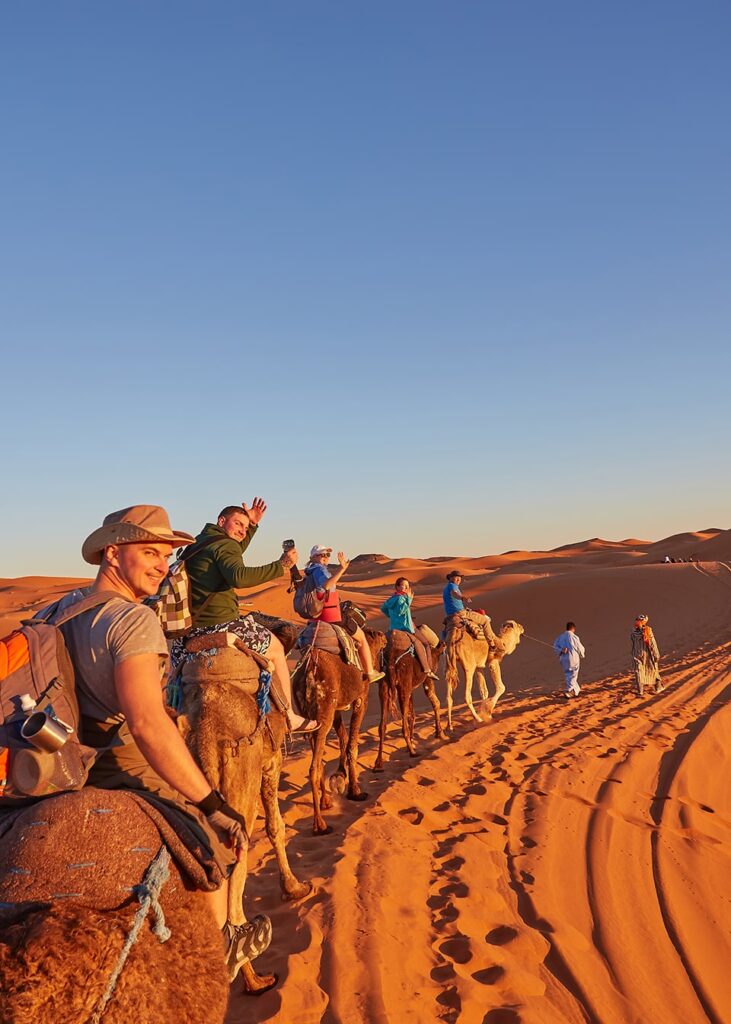
Our team is a diverse collective of passionate travel experts committed to delivering unforgettable adventures. With backgrounds in guiding, logistics, and cultural exploration, each member brings a wealth of knowledge and a personal touch to every journey. We work closely with local communities and trusted partners to ensure that every tour is safe, seamless, and truly enriching. United by a shared love for discovery and excellence, our team transforms travel dreams into reality while fostering lasting connections with every traveler.